
On the last day of 2024, I went to Guangzhou to see two recent metro openings: Guangzhou Metro Line 3 East Extension and Line 11, Guangzhou’s first loop line. I made a quick thread on Twitter/X about my impressions on late 2024’s lesser extension, the Guangzhou Metro Line 3 East Extension. Which is a 9.6 km long underground suburban extension with 4 stations. The extension costed about 150 million PPP adjusted international dollars per kilometer to construct. It was nothing special and you can click the image below for the thread:

This extension remained a bit controversial as Guangzhou Metro Line 3 was one of the world’s most congested metro lines, yet the Guangzhou Metro Line 3 East Extension is a suburban extension that could potentially dump even more passengers into the already well over capacity line. On the other hand, it does provide network building opportunities and network redundancy with its connection to Line 4. Maybe some people from Panyu can now take Line 3 in the counter peak direction to Line 4 (red arrow) and avoid the congested core section of Line 3.
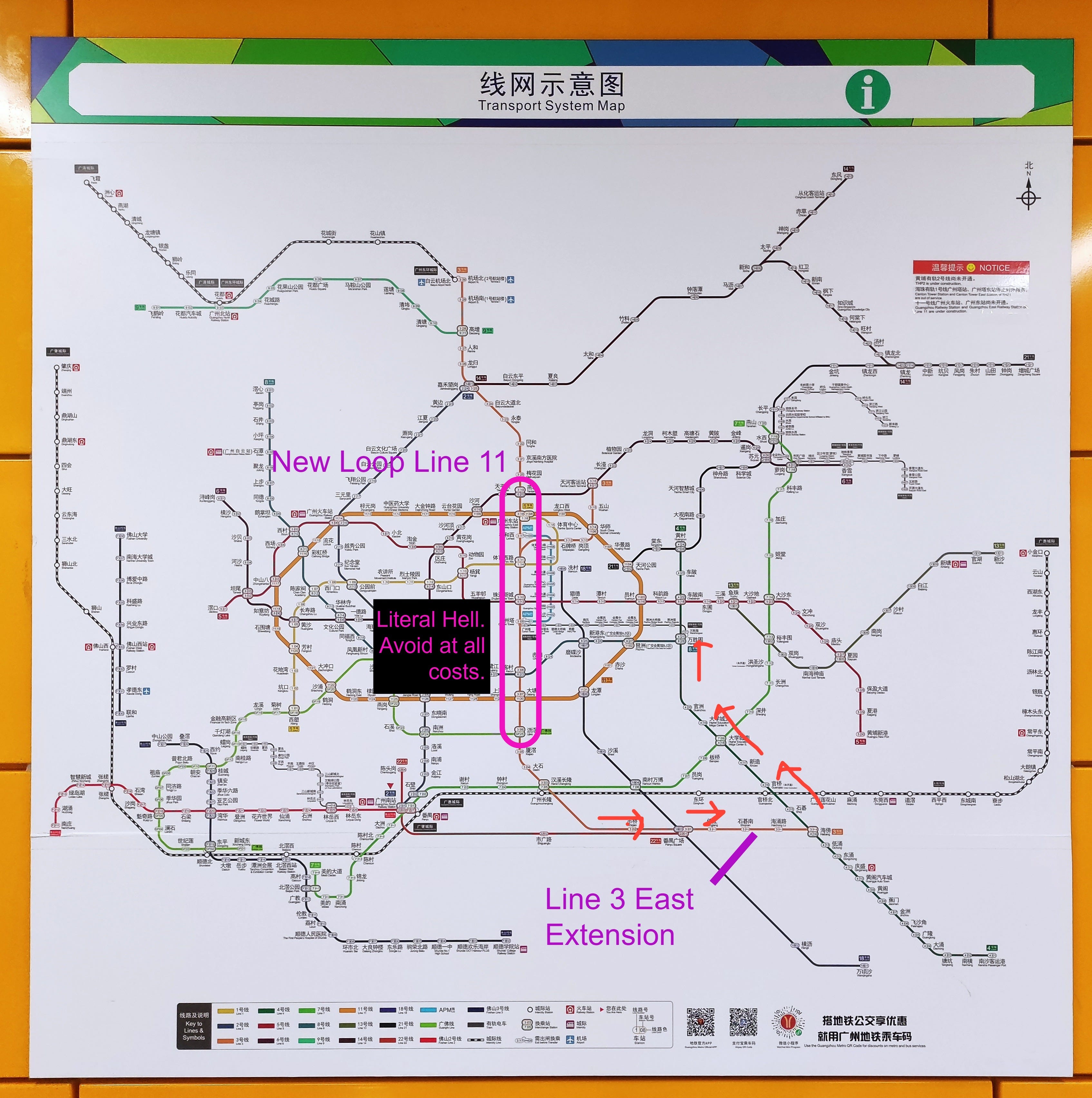
However, Line 4 is an (also) overcapacity Type L suburban light metro line, so over capacity that Guangzhou is considering quadruple-tracking Line 4 to Nansha with a parallel express line under the Guangzhou Rail Transit Network Planning (2018-2035) (广州市轨道交通线网规划(2018-2035年)) masterplan.
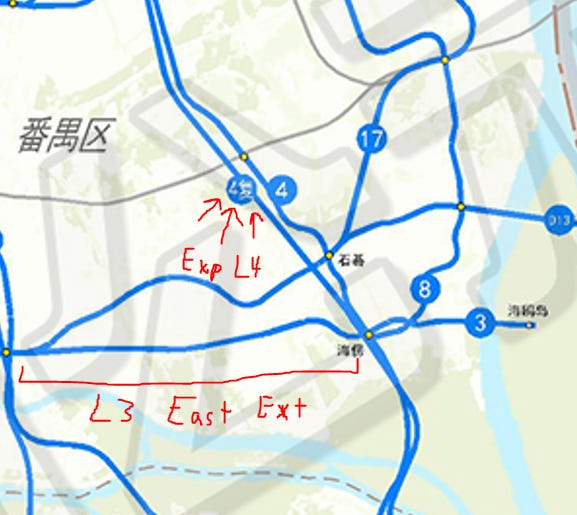
How did it end up this way, with everything so overcapacity on the Guangzhou Metro? Line 3 was designed at a time when Guangzhou was a much smaller city, not the +20 million population juggernaut it is today. It didn’t help that at the time the existing Line 1 and 2 was built with ambitious high capacity Type A trains, when they opened in the late 1990s and early 2000s they initially had “low ridership” (each line carrying ~175,000-200,000 passenger per day). Planners didn’t have the confidence to propose follow up grand metro lines. Plus, at the time Line 3 was planned to be running through the, at the time, obscure *checks notes* “Tianhe CBD”. So it was decided that a downscaled Line 3 would be designed to use lower capacity Type B trains.
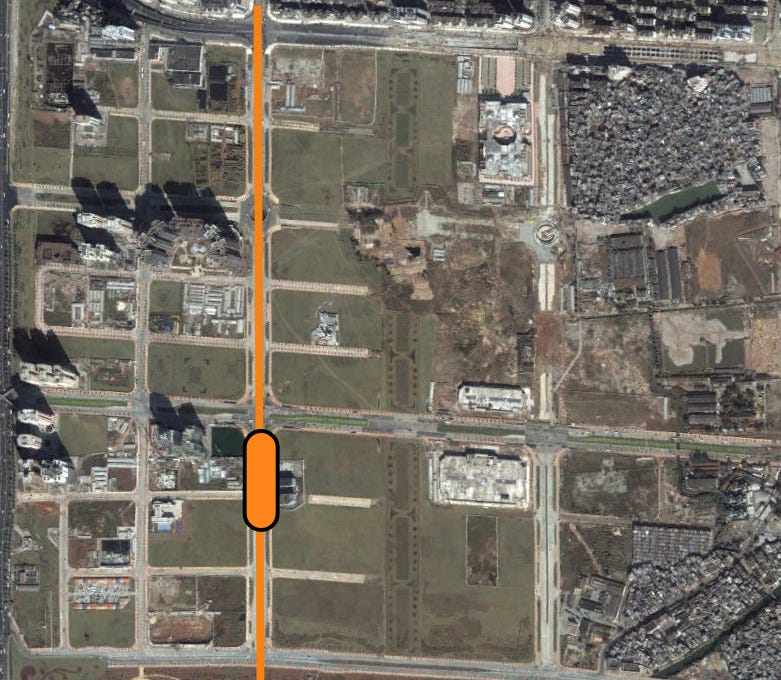
The vision for Line 3 was to initially run 3 car Type B trains and any short term capacity shortfall will be remedied by running them more frequently. It was assumed Line 3 will grow in ridership similar to Line 1 and Line 2 at the time, as in slowly. This planning paradigm was starting to take off in China and was known as “small train formations, high frequency” (小编组、高密度) and had a huge impact on the planning of Guangzhou Metro Lines 3, 4, 5, 6 and 7 as well as Shanghai Metro Lines 5, 6 and 8. In the long term two Line 3 three car units can couple together to form a 6 car train as Line 3’s ultimate configuration for fully mature ridership, which was expected to be decades away. Guangzhou installed what they believed to be a state of the art early 2000s Communications-Based Train Control (CBTC) signaling system on Line 3 that could theoretically allow for just over 30 trains per hour per direction to move down a single track.
Line 3 was designed for box cross-section Type B trains which meant the trains are 2.8m wide and 119m long1, basically a European metro train… but in East Asia with all the high performance demands it comes with. So what volume of demand can these Line 3 trains handle? According to China’s metro design standards GB 50157-2013 “Code for Design of Metro” (地铁设计规范)2 that I have:
Intermediate cars of the Type B train used on Line 3 have a capacity of 230 people and cab cars for some reason have a capacity of 250 people. The left column with higher numbers is what a larger Type A traincar can handle. As noted before, during Line 3’s planning it was envisioned to run the line with 3 car type B trains and then link two units together as a 3+3 consist in the future when demand gradually grows to warrant it (Spoiler: demand did not gradually grow, it exploded). As such, based on the information below each six car Guangzhou Metro Line 3 train holds about 1,400 passengers.3
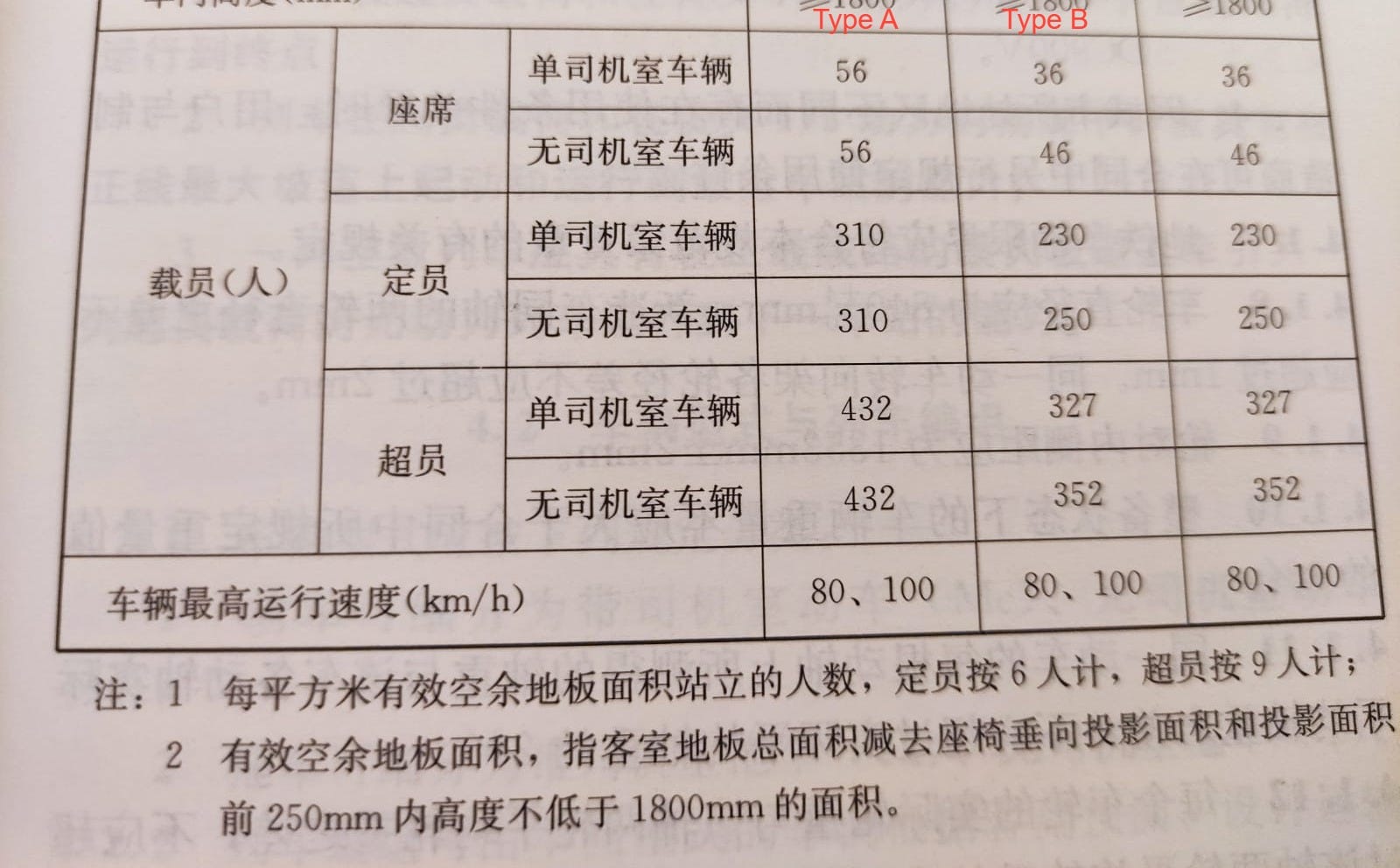
If you think that figure is quite high for what is essentially a European sized metro train (remember 2.8m wide and 119m long), you are correct. The Chinese design standard assumes 6 passengers per square meter of standing area as “at capacity”, as noted in the first footnote at the bottom of table I posted above. A crush loaded train assuming 9 passengers per square meter yields a higher 327 and 352 people per intermediate and cab Type B cars respectively. The world has been shifting to a more forgiving 4 passengers per square meter of passenger standee density these days.
The loading standard does not specify Type B drum (2.88m width) or box cross section (2.8m width) but I’ll assume it is for a box cross section, as drum cross sections were developed much later and Line 3 clearly does use box cross section trains as shown by their straight walled carbody sides with no bulge at the waist of the train.
Both capacity ratings in the metro design standard maybe are too optimistic. It may be physically possible to cram that many humans into six 2.8 by 19 meter metal boxes but is it a good idea? Guangzhou finds out. In the meantime since the 2000s history happens and the booming double digit growth of the Chinese economy has rapidly transformed Guangzhou. Placing unprecedented transport demands on Line 3.
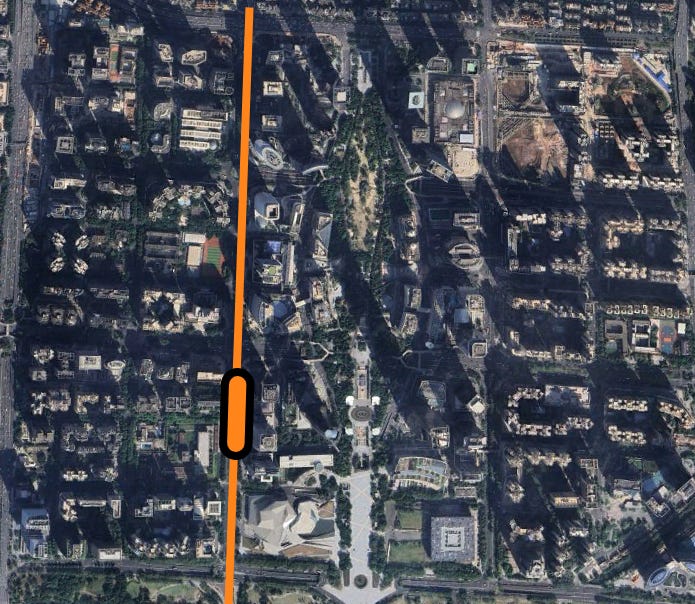
The 3 car trains became six cars only after few years of Line 3 opening instead of the planned timeline of a few decades later. By the late 2010s Line 3’s signal system was reaching the limit in the frequency of trains it can schedule. Yet Line 3 was still extremely congested. Guangzhou Metro Line 3, until recently, was (arguably) the only line that served this:
Video by Jack ོ on XHS.
The result is severe congestion on Guangzhou Metro Line 3. I’d argue it is some of the worse on the planet and I have ridden rush hour trains all over the world, particularly East Asia, the land of congested trains. So what is the crowding like on Line 3? According to the China Association of Metros (CAMET), which posts annual reports on the state of metros in China, the busiest sections of Line 3 reached 64,300 passengers per hour per direction (pphpd) in 2018.
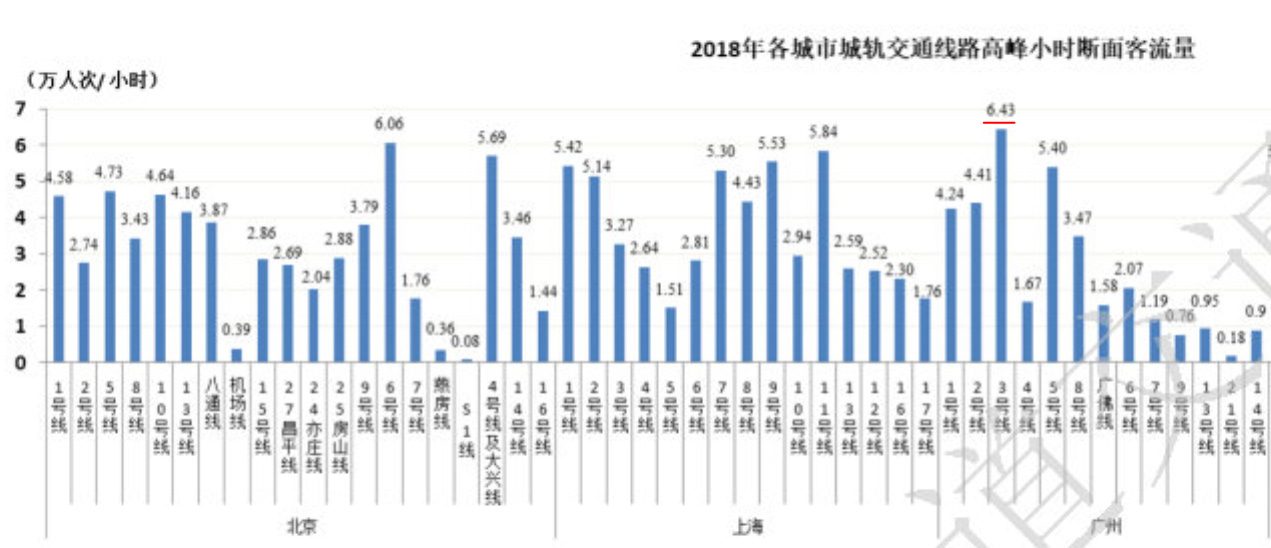
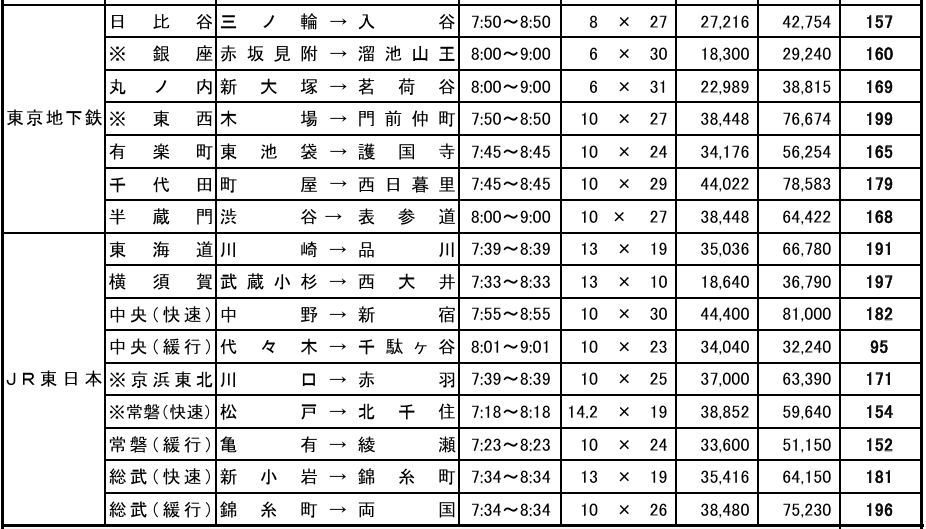
Remember, Line 3 uses downscaled European sized trains that are just over 100m long running every 2 mins (30 trains per hour per direction). This passenger flow figure exceeds anything a single two track line has achieved outside of Asia: from the RER A in Paris, Crossrail in London to the Lexington Line in New York. 64,300 people per hour per direction is a comparable passenger throughput found in Tokyo’s or Hong Kong’s busiest metro lines. However, those systems mitigate such high demand by deploying massive +200m long East Asian style trains every 2-2.5 mins. As a comparison, the busiest section of Guangzhou Metro Line 3 in 2018 was conveying similar amounts of passengers in one direction as the busiest single direction section of the Keio Line, Tokyo Metro Hanzomon Line, JR-East Tokaido Line, Keihin-Tohoku Line and Sobu Rapid but using European sized trains.


The busiest section Guangzhou Metro Line 3 in 2018 was moving more people per hour than the Hong Kong MTR East Rail Line (ERL) in 2017. The Hong Kong MTR uses massive 3.2 meter wide by 220 meter long trains similar to Japan.

To drive the comparison home, the busiest section Guangzhou Metro Line 3 in 2018 was moving more people per hour than the busiest section of the JR-East Yamanote Line in 2019 and the Yamanote Line uses 3m wide by 220 meter long trains.


So how does the congestion of Guangzhou Metro Line 3 compare? Well as I noted above, each six car Guangzhou Metro Line 3 train holds 1,400 passengers assuming a standee density of 6 passengers per square meter. The CBTC signaling system can handle about 30 trains per hour assuming station circulation management and crowd control are satisfactory so station dwells are controlled, using MATH:
1,400 passengers / train × 30 trains / hour / direction = 42,000 pphpd
But CAMET reported the busiest section of Guangzhou Metro Line 3 moved 64,300 pphpd in 2018. So your congestion rate, defined as transported volume over capacity and expressed as a percentage, is:
64,300 pphpd / 42,000 pphpd × 100% = 153% assuming 6 passengers per square meter
Compare Guangzhou’s 153% loading rate with Hong Kong’s ERL, which has a similar standee assumption entry of 6 passengers per square meter, which was 67%. In another comparison, using the notoriously low Japanese loading standards applied to Guangzhou, I estimate that Japan would class the congestion rate (混雑率) of Guangzhou Metro Line 3 at around 225%-250%. Record breaking passenger volumes on modestly sized trains. So yes, Guangzhou Metro Line 3 is very congested, like world topping congested. Sadly there isn’t really any quick fixes Guangzhou can do to resolve this, yet at the same time Line 3 was going to be extended. Below is what everyone has to endure, I shuffle around a concourse trying to get down to the platform to take Guangzhou Metro Line 3 in the afternoon with over 2 million daily users of Guangzhou Metro Line 3:
I rarely have space to whip out my camera when the platform of Line 3 gets so crowded. Here is a video of Line 3 from a brave soul (广茂线上的DF11G) back in 2022 when COVID depressed ridership:
So now you know why Line 3 Eastern Extension was a little controversial, it was (reasonably) assumed it would make Line 3 worse. This is where another line that opened at the same time as Line 3 Eastern Extension, Line 11 (the loop line), comes into play. IMHO the joint opening with Line 3 Eastern Extension with Line 11 on December 2024 was no coincidence. So stay tuned for Part 2 where I explore Line 11 physically and ponder its implications mentally:
So thanks for reading this analysis of Guangzhou. Like, share and subscribe for more news on how the world's most congested metro lines will get better.
Or drop me a Ko-fi if you like what you read!

Below is Part 2:
Guangzhou Metro 2024 Openings Part 2: Line 11 to the Rescue?

This is a part 2 of a multi-part series where I explore the Guangzhou Metro lines that newly opened in December 2024. You can read the first part which provides more context below:
Line 3 was initially designed Mcp+T+Mcp=Mcp+T+Mcp where M is motored, c is cab car, T is trailer or non-motorized and p is pantograph. A 3+3 car configuration meant cars 3 and 4 had needed to be cab cars which in China are 1m longer. Length calculated as 20m+19.5m+20m+20m+19.5m+20m with length data from GB 50157-2013 Code for Design of Metro (地铁设计规范).
Yes it admittedly is out of date but still valid on this use case, it is not like the trains suddenly changed sizes.
Again, Line 3 was initially designed Mcp+T+Mcp=Mcp+T+Mcp where M is motored, c is cab car, T is trailer or non-motorized and p is pantograph. A 3+3 car configuration meant cars 3 and 4 had needed to be cab cars. Capacity calculated in reference to GB 50157-2013 Code for Design of Metro (地铁设计规范) as such the calculation for a Guangzhou Metro Line 3 train is as follows: 250+230+250+250+230+250.
I remember taking the taxi to Xiancun station to take Line 18 to Panyu Square then transferring to Line 22 to go to Guangzhou South Railway Station. There was much less people than taking Line 3 which felt so nice.
64,300 passengers per hour per direction is INSANE to me.
Over double the crush load of the Line 1 Yonge Subway capacity jeez